
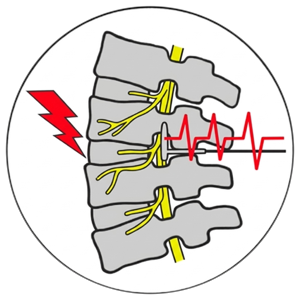
Neuromodulation for Chronic Intractable Pain
When persistent chronic pain persists despite comprehensive surgical or pharmacological interventions, neuromodulation offers an advanced, evidence-based treatment option for selected patients. Suitability is evaluated individually in collaboration with our specialized medical team.
What is Neuromodulation?
Neuromodulation utilizes gentle, therapeutic electrical pulses to modulate and disrupt the transmission and central processing of pain signals within the nervous system. The most widely established technique is Spinal Cord Stimulation (SCS).
Additional advanced modalities include Dorsal Root Ganglion Stimulation (DRG) and Peripheral Nerve Field Stimulation (PNFS). Depending on the pathology, specialized leads/electrodes are positioned epidurally near the spinal cord, adjacent to the dorsal root ganglion, or near target peripheral nerves. An implantable pulse generator (IPG) delivers and controls stimulation with the objective of providing significant pain relief and restoring everyday mobility.
 Chronic Refractory Neuropathic Pain
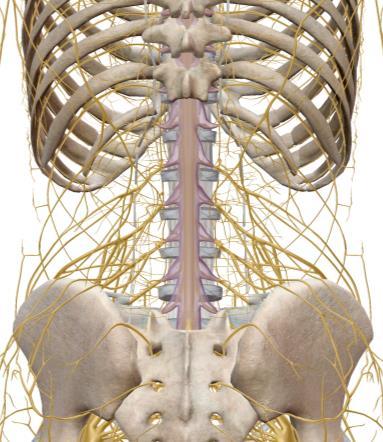 Targeted Modulation of Pain Pathways
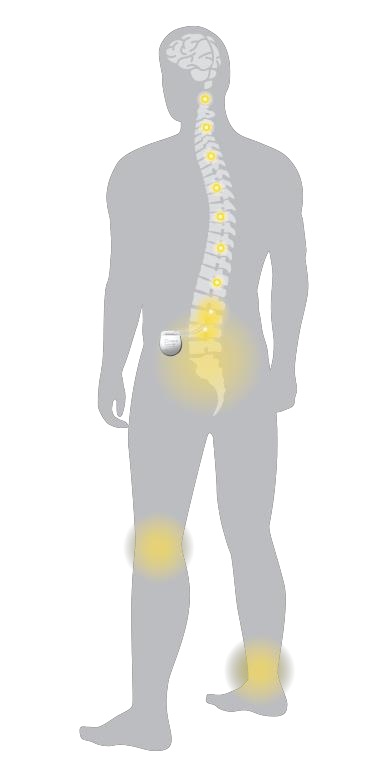 Implantable Pulse Generator (SCS)
Who is Eligible for Neuromodulation?
Specialized neurosurgical consultation is indicated for patients presenting with:
- Failed Back Surgery Syndrome (FBSS): Persistent neuropathic back and radicular leg pain following prior spinal operations.
- Complex Regional Pain Syndrome (CRPS I & II / Sudeck's atrophy) of the upper or lower extremities.
- Neuropathic pain from traumatic peripheral nerve injury or post-surgical nerve damage.
- Specific forms of phantom limb pain and brachial plexus avulsion pain.
- Selected patients with refractory angina pectoris (persistent ischemic chest pain despite maximal cardiological intervention, following comprehensive cardiological clearance).
Note: Neuromodulation is not appropriate for every cause of pain and does not replace careful diagnostic evaluation or a multimodal pain management concept.
How is Suitability Evaluated? (The Two-Stage Process)
Our team comprehensively evaluates your clinical pain history, prior treatments, neurological examinations, and individual therapeutic goals. A defining advantage of neuromodulation is the two-stage screening procedure:
The Screening Trial (Trial Phase)
Through a minimally invasive procedure, thin temporary electrodes are placed into the epidural space and connected to an external stimulator. Over several days in your everyday environment, you evaluate firsthand whether pain is significantly alleviated and function is restored.
Permanent Implantation
Only when the trial confirms convincing pain relief (≥ 50%) and clear improvement in quality of life is the permanent pulse generator (IPG) implanted beneath the skin in an outpatient or short-stay setting.
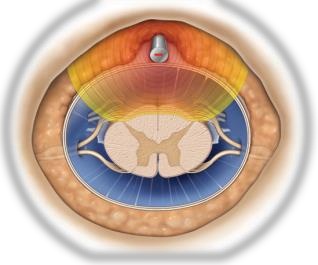 Dorsal column electrical field covering sensory pain pathways
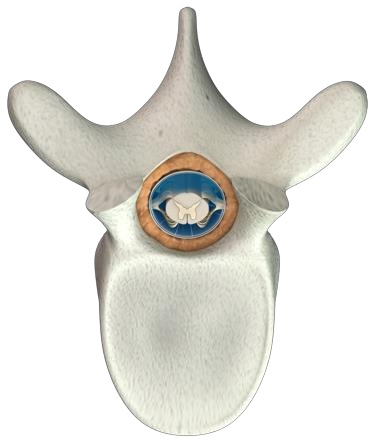 Epidural lead positioning within the spinal canal
Important Clinical Considerations
Successful neuromodulation can substantially reduce chronic pain and dramatically improve quality of life, though it does not necessarily reverse the underlying structural etiology. Therapeutic efficacy varies between individuals. Ongoing medical follow-ups, battery management, and parameter adjustments ensure optimal long-term results.
Whether neuromodulation is the right path for your situation can only be determined through personal neurosurgical consultation.